
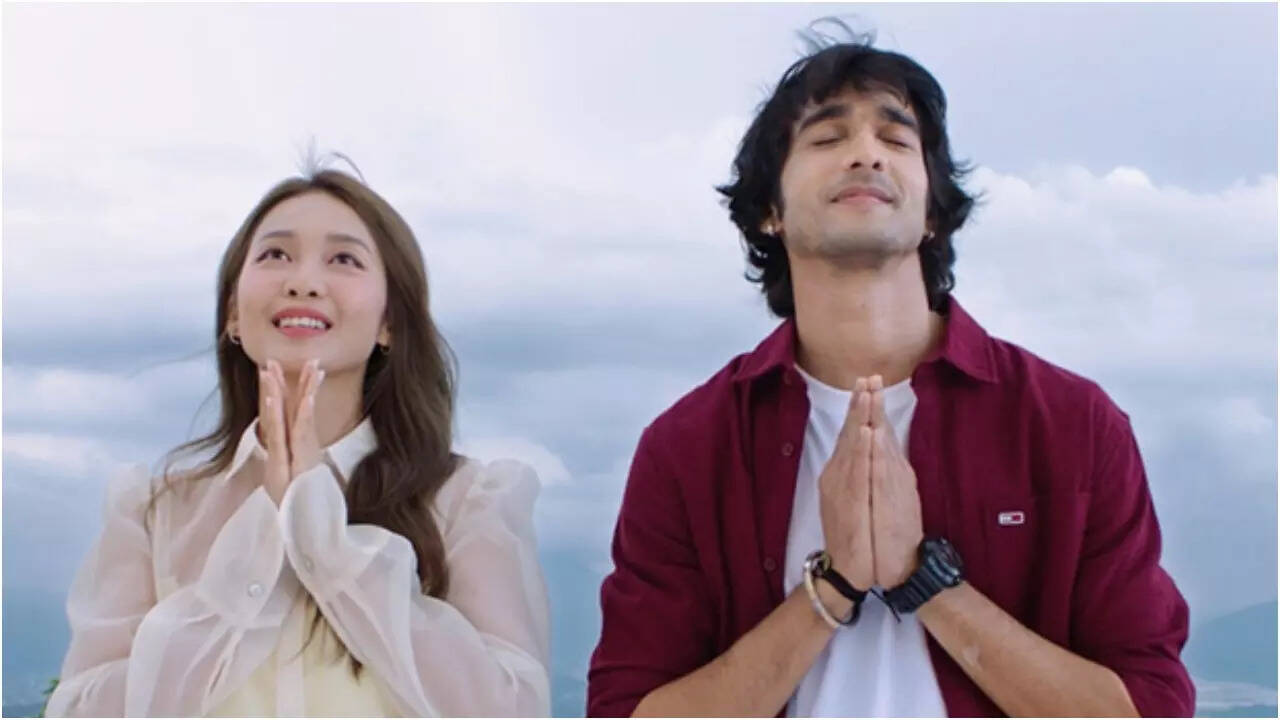
I’ll be honest — there’s something oddly powerful about a single film still. No dialogue. No soundtrack swelling in the background. Just a frozen moment that somehow tells you everything you need to know.
That was exactly my reaction when I first came across Shantanu Maheshwari and Kha Ngan in a still from Love in Vietnam.
It wasn’t loud. It wasn’t dramatic in the obvious way. But it lingered. And in today’s fast-scrolling digital world, when something makes you pause for even five seconds, that’s saying a lot.
As someone who’s spent years covering cross-cultural cinema and emerging international collaborations, I’ve learned to trust that instinct — the pause, the quiet intrigue. Sometimes, a still image can hint at a bigger shift happening behind the scenes of global storytelling.
And this one? It feels like more than just a promotional frame.
Table of Contents
When Two Worlds Meet on Screen
There’s a certain electricity when artists from different cultural backgrounds collaborate. It’s not just about diversity in casting; it’s about narrative texture. It’s about what happens when two cinematic traditions intersect — the emotional cadences, the body language, even the way silence is handled.
Shantanu Maheshwari, known for his expressive screen presence and dance background, carries a certain fluidity in performance. There’s a softness to his expressions that often feels internal rather than performative. Kha Ngan, on the other hand, brings a distinctly Vietnamese cinematic sensibility — subtle, composed, and layered with quiet strength.
When I saw that still — the two framed in what appears to be a quiet, intimate moment — it struck me how naturally their energies seemed to align. No exaggerated gestures. No overplayed romance. Just a look that suggests history, tension, and possibility all at once.
And honestly, that’s rare.
Cross-border productions often struggle with tonal consistency. Either they lean too heavily into cultural stereotypes or they flatten differences altogether. But from the visual storytelling hinted at in Love in Vietnam, there seems to be a careful balance at play.
The Rise of Cross-Cultural Romance in Asian Cinema
If you’ve been paying attention over the past decade, you’ll notice a subtle but steady increase in films that bridge national identities across Asia. It’s not accidental.
Audiences are more globally aware than ever. Streaming platforms have broken geographic barriers. Viewers in Mumbai are watching Vietnamese dramas; audiences in Hanoi are discovering Indian romantic narratives. The appetite is there.
Love in Vietnam appears to tap directly into that shift.
There’s something deeply compelling about romance stories that unfold between people shaped by different social norms, family expectations, and emotional languages. Love, after all, is universal — but the way it’s expressed? That’s cultural.
The still of Shantanu Maheshwari and Kha Ngan in a still from Love in Vietnam quietly captures that duality. It suggests a meeting point — not just of two characters, but of two cinematic heritages.
Why Visual Chemistry Matters More Than Dialogue
You might not know this, but casting chemistry is often tested through still photography before full scenes are even shot. Directors look for something intangible — the way two actors occupy space together.
It’s not about proximity. It’s about tension.
In that frame, there’s a softness in posture, an awareness of the other person that feels authentic rather than staged. It doesn’t scream “romance.” It whispers it.
And whispers, in film, can be far more persuasive.
One of the biggest pitfalls in international romantic dramas is overcompensation — pushing too hard to make the emotional stakes clear. But the still suggests restraint. A confidence in letting viewers lean in rather than pushing them back in their seats.
As someone who’s watched countless cross-market releases try (and fail) to capture that nuance, I was surprised to feel genuinely optimistic about this pairing.
Cultural Storytelling Without Exoticism
Here’s the tricky part about films set in culturally rich landscapes like Vietnam: it’s easy to romanticize the setting more than the characters.
We’ve all seen it. Sweeping drone shots, postcard sunsets, lantern-lit streets — beautiful, yes, but sometimes shallow.
What intrigues me about Love in Vietnam, based on early visuals and promotional glimpses, is that it doesn’t seem to reduce the setting to a backdrop. The emotional focus appears grounded in character dynamics rather than scenery.
That still doesn’t feel touristic. It feels lived-in.
There’s a groundedness to Kha Ngan’s gaze, and a contemplative quality to Shantanu’s expression, that hints at a narrative rooted in emotional realism rather than aesthetic spectacle.
And that matters. Especially for audiences increasingly wary of surface-level representation.
The Indian–Vietnamese Creative Exchange
Beyond the romance narrative, there’s a broader industry story unfolding here.
India’s film industry has long been a powerhouse in global entertainment, but collaborations with Southeast Asian markets are still relatively underexplored. Vietnam, with its rapidly growing film sector and youthful audience base, represents a fascinating creative frontier.
Projects like this aren’t just artistic experiments. They’re strategic bridges.
From a production standpoint, such collaborations require meticulous coordination — language coaching, cultural consultation, script localization. It’s not simple. And when done poorly, the seams show.
But when done well, the result can feel seamless — like two musical styles blending into a new harmony.
The presence of Shantanu Maheshwari and Kha Ngan in a still from Love in Vietnam symbolizes more than casting. It reflects a willingness to experiment with shared narratives across borders.
And frankly, that’s where the future of Asian cinema may well be heading.
Digital Buzz and Organic Curiosity
Interestingly, much of the conversation around the film so far has grown organically. Social media users aren’t just sharing promotional posters; they’re dissecting expressions, speculating about plotlines, and debating character arcs based on minimal information.
That kind of curiosity can’t be manufactured easily.
In today’s marketing ecosystem, audiences are quick to detect inauthentic hype. But genuine intrigue — especially around cross-cultural storytelling — spreads differently. It’s more conversational. More speculative.
I’ve noticed fans discussing how the pairing might challenge conventional romantic tropes. Will it explore cultural misunderstandings? Family resistance? Or will it lean into universal themes of longing and timing?
The still doesn’t answer those questions. It invites them.
The Subtle Power of Representation
There’s also something quietly meaningful about seeing a collaboration that doesn’t center Western validation.
For decades, international recognition often meant alignment with Hollywood aesthetics. But here, we’re witnessing an intra-Asian narrative exchange — two industries speaking to each other directly.
That shift feels significant.
Representation isn’t just about who appears on screen. It’s about whose stories are prioritized, whose emotional frameworks are explored without translation for a Western gaze.
Love in Vietnam seems positioned within that evolving landscape — confident in its cultural identity while remaining accessible.
And that still? It’s a microcosm of that confidence.
Why This Moment Matters
Sometimes we underestimate the cultural weight of what appears to be a simple promotional image.
But think about it — every major cinematic movement starts with small signals. A casting choice. A co-production announcement. A still that sparks discussion.
The image of Shantanu Maheshwari and Kha Ngan in a still from Love in Vietnam feels like one of those signals. Quiet but indicative.
It suggests a film that understands restraint. That trusts its audience. That believes chemistry doesn’t need loud declarations to be felt.
As someone who’s watched global cinema evolve over the years, I find that promising.
A Final Thought
Well, here’s the thing about stories that cross borders: they don’t just entertain. They expand empathy.
When audiences see characters navigating unfamiliar cultural landscapes — falling in love, making mistakes, finding connection — it gently widens perspective.
That’s the real power of projects like Love in Vietnam.
Whether the film ultimately becomes a blockbuster or a cult favorite almost feels secondary. What matters is the intention behind it — the willingness to experiment, to blend traditions, to trust subtlety.
And sometimes, all it takes to sense that intention is a single frame.
A glance. A shared silence. A moment suspended in time.