


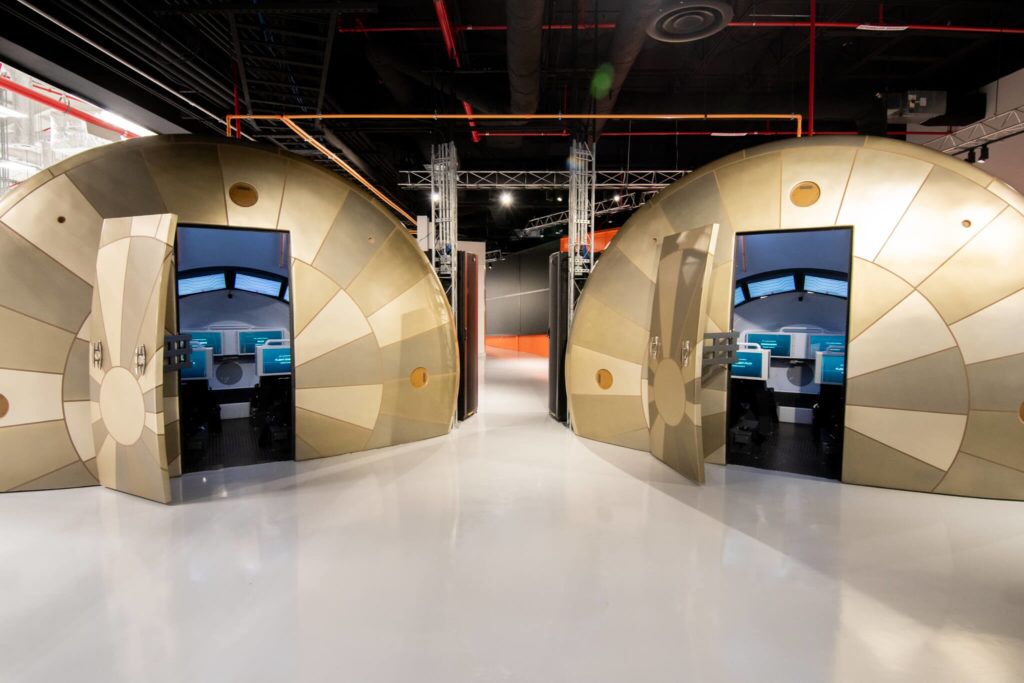
I still remember the first time I walked into a place that completely changed my mood before I even realized it had. It wasn’t a theme park. It wasn’t even somewhere particularly famous. It was a restaurant designed to feel like an old maritime trading port — weathered wood beams, the faint scent of salt in the air, lantern-style lighting that made everything glow just a little softer.
I wasn’t just there for dinner. I was somewhere else entirely.
That’s when it clicked for me: some environments don’t just host experiences — they create them.
And if you’ve ever wondered who’s responsible for that seamless blend of storytelling, architecture, psychology, and business strategy, the answer lies with themed entertainment design companies. They’re the quiet architects behind the magic, shaping how we feel in physical spaces — often without us even noticing.
Let’s talk about why that matters more than ever.
Table of Contents
It’s Not Just Decoration. It’s Emotional Engineering.
We tend to think of “theming” as surface-level — a coat of paint, a few props, maybe a catchy name on the entrance sign. But that’s a misunderstanding.
True themed design starts with narrative.
Before a single wall goes up, there’s a story being built. Who is the guest? What journey are they on? What emotional beats should they experience? Excitement? Nostalgia? Comfort? Curiosity?
I was surprised to learn just how intentional it all is. Designers map guest flow the way filmmakers map scenes. They consider sightlines, sound bleed, lighting temperatures, tactile textures, even how long someone might pause at a particular installation. It’s immersive design, yes — but it’s also behavioral science in action.
And in today’s attention economy, where people are overstimulated and hard to impress, creating that kind of immersive environment isn’t optional. It’s strategic.
Why Brands Are Investing in Immersive Spaces
Here’s something you might not know: the rise of experiential retail isn’t just a trend. It’s a response.
E-commerce made convenience easy. But it also stripped away physical discovery. Brands had to answer a new question: Why should someone leave their house to visit us?
The answer? Give them something they can’t scroll past.
That’s why we’re seeing museums built inside flagship stores, interactive dining concepts, multi-sensory pop-ups, branded attractions inside shopping centers, and hybrid spaces that blur the line between entertainment and commerce.
And this is exactly where themed entertainment design companies come into play. They’re not simply decorating venues — they’re engineering reasons for people to show up.
A well-designed immersive space increases dwell time. It boosts social sharing. It deepens brand memory. It turns customers into storytellers.
Honestly, when you look at the data, it’s hard to argue against it. Physical spaces that trigger emotional engagement consistently outperform those that don’t. People remember how a place made them feel long after they forget what they bought.
The Psychology Behind the Spectacle
There’s something almost primal about stepping into a fully themed environment. It taps into childhood imagination — the same instinct that once made us turn cardboard boxes into castles.
Immersive design works because it reduces cognitive friction. Instead of asking guests to “imagine” a story, it builds the world for them. Their brains relax into it.
Designers understand this deeply. They use forced perspective to make spaces feel grander. They control lighting to subtly guide movement. They layer ambient sound so transitions between zones feel natural instead of jarring.
Even scent plays a role. Certain smells can trigger memory recall with remarkable strength. That’s not accidental. It’s strategy.
And while theme parks are the obvious example, the real growth is happening elsewhere — in hospitality, retail, mixed-use developments, branded attractions, and even corporate spaces.
The future of brick-and-mortar isn’t transactional. It’s theatrical.
From Concept Art to Concrete
One thing people rarely see is how complex these projects are behind the scenes.
A fully realized themed space isn’t just a creative endeavor. It’s a multidisciplinary orchestration. Architects, engineers, writers, fabricators, lighting specialists, technologists — sometimes hundreds of professionals collaborate over years to bring a single vision to life.
Budgeting alone can be staggering. Large-scale attractions operate with the precision of infrastructure projects. Safety regulations, structural engineering, visitor flow modeling — all must integrate seamlessly with creative storytelling.
It’s this blend of art and technical rigor that separates true industry leaders from surface-level decorators.
When developers or brand executives begin exploring immersive projects, many turn to established themed entertainment design companies because experience matters here. Mistakes are expensive. And in experiential environments, execution quality is visible instantly.
You can’t fake immersion.
The Social Media Effect (For Better or Worse)
Let’s address the obvious: Instagram changed everything.
There was a time when themed spaces were designed purely for in-person delight. Now, designers have to consider how a location will photograph, how it will look in vertical video, how lighting translates through phone cameras.
On one hand, that’s created some shallow copycat environments — spaces designed more for selfies than substance.
But on the other hand, it’s raised the bar. If a space doesn’t feel visually compelling, it risks irrelevance. People share what amazes them.
The smartest designers strike a balance. They build environments that are photogenic because they’re authentic — not because they’re gimmicky.
And the brands that understand this are seeing powerful returns. Organic social reach generated by immersive environments often outperforms traditional ad spend. Visitors become ambassadors.
Immersion Beyond Entertainment
Here’s where it gets really interesting.
The principles of themed design are expanding into unexpected sectors. Healthcare facilities are integrating calming, narrative-driven spaces to reduce patient anxiety. Educational institutions are building interactive environments that transform learning into participation rather than passive intake.
Even corporate offices are rethinking their interiors to encourage collaboration and creativity.
Immersion isn’t about spectacle alone. It’s about intentionality.
When a space is thoughtfully designed, it influences behavior in measurable ways. It can reduce stress. Increase engagement. Encourage exploration.
In that sense, themed design is less about fantasy and more about function.
What Makes a Project Truly Successful?
From the outside, it’s easy to measure success by foot traffic or ticket sales. But insiders look at something deeper: repeat visitation.
If guests return — and bring friends — the design did its job.
Successful immersive environments create emotional anchors. They leave people with stories. And those stories build loyalty far more effectively than discounts or loyalty cards ever could.
Another key factor? Authenticity.
Audiences are sharper than ever. They can sense when something feels manufactured purely for profit. The best projects align story, brand values, and spatial design into something cohesive. No mixed signals. No forced gimmicks.
Just clarity of vision.
The Future of Immersive Design
Where is all this heading?
Well, technology is accelerating things. Projection mapping, augmented reality overlays, responsive environments powered by sensors — these tools are becoming more accessible and more sophisticated.
But here’s the truth: technology alone doesn’t create magic. Story does.
The most forward-thinking designers use tech as a layer, not the foundation. They understand that emotional resonance doesn’t require flashy gadgets. Sometimes it’s as simple as the sound of creaking wood underfoot or the way light spills across textured walls.
I suspect we’ll see even more hybridization in the coming years. Retail blended with entertainment. Hospitality layered with narrative. Public spaces infused with interactive storytelling.
Physical spaces will compete not on convenience, but on meaning.
Why This Matters More Than Ever
We live in a digital-first world. Most of our interactions happen through screens. Convenience is high. Connection? Not always.
That’s why immersive environments feel so powerful right now. They remind us that shared, physical experiences still matter.
When a space transports us, even briefly, it creates a pause in the constant scroll. It demands presence.
And maybe that’s the real value here.
The work of themed entertainment design companies isn’t just about spectacle. It’s about crafting moments that anchor people in time and place. Moments that linger.
I’ve walked out of well-designed immersive spaces feeling oddly refreshed — like I’d stepped outside routine reality for an hour and returned with clearer perspective. It’s subtle, but real.
In a world chasing efficiency, there’s something radical about designing for wonder.
Final Thoughts
Not every business needs a full-scale immersive attraction. But every brand can learn from the principles behind them: intentional storytelling, emotional engagement, sensory coherence, and authentic execution.
Because at the end of the day, people don’t remember square footage or construction budgets.
They remember how a place made them feel.
And if a thoughtfully designed environment can make someone pause, smile, explore, or share that experience with someone else — that’s not decoration.